Team Member Feature
Understanding Veteran Care Through a Veteran’s Eyes: Lyndsay’s Story
For Lyndsay, the challenges veterans can face after military service are familiar territory.
Before joining the Elara Caring team in Chariton, Iowa, Lyndsay served five years in the U.S. Army, including a deployment to Afghanistan. As a 92A logistics specialist, she learned to stay organized, solve problems and step in wherever she was needed.
“I just kind of did a little bit of everything,” Lyndsay said.
Many of those skills carried into civilian life and, eventually, healthcare. Today, Lyndsay works as a receptionist with Elara Caring, supporting a busy care team and helping keep day-to-day operations moving.
Her own transition out of the military also shaped how she views some of the barriers veterans may encounter when trying to access healthcare, benefits and other services.
“I think the biggest problem with veteran care is making sure that they have the resources and the connections,” she said.
Lyndsay remembers doing a lot of research to find the veterans benefits available to her. She said that process isn’t always easy. Some older veterans may be less comfortable using online tools, while others may not know which programs are available or where to start.
“Having someone be their navigator through it is very important for them,” Lyndsay said.
She also knows that when answers are difficult to find, not everyone will continue searching. That perspective is one reason Elara Caring’s focus on veterans stands out to her.
“I love how they do care so much about the veterans and they want to help,” she said.
That focus is reflected in Front & Center, Elara Caring’s initiative dedicated to veteran-centric care and helping veterans and their families connect with the assistance available to them.
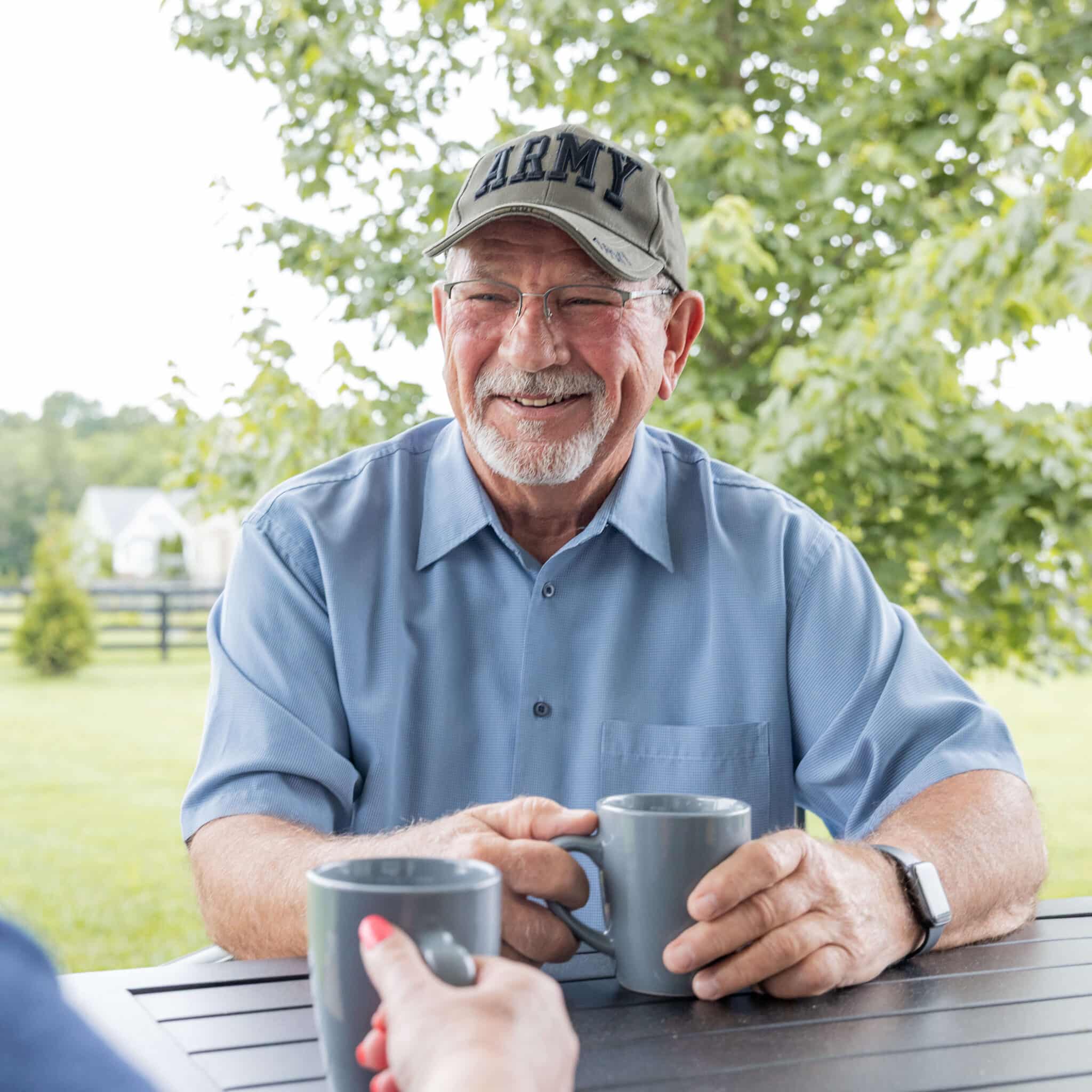
Front & Center recognizes that military service can influence a person’s health, preferences and outlook long after active duty. Learning about a veteran’s military history can give care teams greater insight into the person behind the uniform, while also helping identify services and resources that may benefit the veteran and their family.
Lyndsay said that approach reflects something she knows firsthand. Veterans have spent part of their lives serving others. When the time comes for them to receive care, having clear guidance and people who recognize what they’ve experienced can make the process easier.
Her years in the Army may be behind her, but what Lyndsay learned there continues to shape how she approaches her work today. At Elara Caring, she has found a team that shares her respect for those who served and recognizes the value of veteran-centric care. There’s something meaningful about that shared purpose: honoring military service not only with gratitude, but by making sure veterans are seen, understood and supported in the care they receive.