
Low vision rehab program
Eye Care We Care Program
Eye Care We Care Program
Our low vision rehabilitation skilled home health program is designed to improve function and quality of life focusing on preventing accidents and injury. Our occupational therapists teach patients how to use their remaining vision more effectively by incorporating techniques and adaptive equipment to maintain independence and safety at home.
Interactive Patient Guide
We provide a patient guide and resource booklet designed to offer low vision education, compensation towards independence and safety. It is an ongoing reference for the patient with focus on self-assessment, disease management and wellness.

Our Team
Our occupational therapy care team manages our low vision rehabilitation program designed to improve function and quality of life. This program teaches how to use remaining vision more effectively by incorporating compensatory techniques and adaptive equipment to maintain independence and safety at home.

Components of the Program
We are just a phone call away 24 hours per day, 7 days per week. If you have a question or concern we want you to call us for help. We are ready to listen, answer questions, give direction and take action whenever you need us.
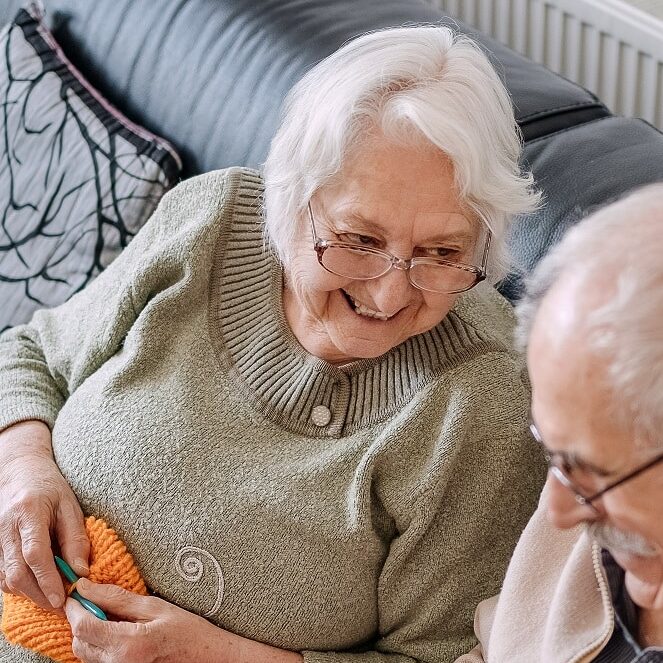
Meet Vivian
Vivian is 79 years old and loves spending time with her husband, children and grandchildren. She also enjoys crocheting and crafting. She considers herself active and manages a few health conditions, including Type 2 Diabetes, high cholesterol and arthritis.
Recently, Vivian was hospitalized after her blood sugar became very high. Just a few weeks later, she had another episode where her blood sugar dropped too low. During her hospital stay, her care team discovered the reason why.
Vivian has low vision, and it was making everyday tasks much harder. She couldn’t clearly read her medication labels, insulin markings or food packaging. She was also skipping meals because it felt unsafe to use the microwave or prepare food on her own. Managing her diabetes had become very difficult.
Her doctor recommended in-home care to help her stay safe and get her health back on track.
A nurse began visiting Vivian at home to help her manage her blood sugar, understand her medications and safely take her insulin. An occupational therapist also worked implemented the Eye Care, We Care program, focusing on her vision needs and how they affect daily life.
Together, they made simple changes around her home to improve safety and make tasks easier. This included better lighting, easy-to-use tools and organizing her space so she could find things more easily. Vivian also learned new ways to safely prepare meals and manage her daily routine.
With this support, Vivian started to feel more confident and in control again. She was able to return to many of the activities she enjoys. Her daughter also learned simple ways to support her at home, bringing peace of mind to the whole family.
In-home care helped Vivian regain stability, independence and the ability to safely manage her health at home.
In-Home Care for Low Vision
Low vision can make everyday activities like reading, cooking or moving safely around the home more difficult. With the right support, many individuals with vision loss can continue living safely at home while maintaining independence and confidence in their daily routines.

Safe at Home
Skilled Home Health can help patients transition safely back into their home setting and help minimize the likelihood of rehospitalization.
Learn more


